
THANK YOU FOR SUBSCRIBING
This article is part of Metals Mining review's Insights series featuring expert contributions nominated by our subscribers and reviewed by our editorial team in Fort Lauderdale, FL.
The inherent tension between capitalism's drive for profit and environmentalism's imperative to safeguard ecosystems has long fueled debates, litigation, and political divides. In the United States, the 20th-century boom in coal production for energy left behind vast legacies: coal waste impoundments that pose enduring hazards to water, soil, and wildlife while burdening industry and taxpayers with remediation costs. Yet, emerging technologies offer a potential bridge—extracting valuable rare earth elements (REEs) and precious metals from these wastes to generate revenue while remediating environmental damage. This approach aligns capitalist incentives with ecological restoration, turning hazardous byproducts into resources.
Coal waste impoundments primarily fall into two categories. Coal slurry impoundments (from mining preparation, holding fine refuse behind dams, often in valleys) number around 600 historically, concentrated in Appalachia (e.g., West Virginia with over 100). These are regulated by the Office of Surface Mining Reclamation and Enforcement (OSMRE) and Mine Safety and Health Administration (MSHA). Separately, coal combustion residuals (CCR or coal ash) from power plants include about 735 active surface impoundments (plus over 300 landfills), with legacy/inactive units adding hundreds more under EPA's 2015 CCR Rule and 2024 updates.
Total volumes are immense but imprecise. Coal ash storage exceeds 2 billion short tons across over 1,000 sites. Coal mining refuse (fines/slurry) estimates reach similar scales, often in billions of gallons for slurry. Individual sites can hold hundreds of millions to billions of gallons, as seen in historic spills (e.g., 309 million gallons in 2000, 132 million in 1972).
These wastes contain economically interesting concentrations of REEs (the 15 lanthanides plus yttrium and scandium) and trace precious metals (gold, silver, platinum). REEs concentrate during combustion (4-10x higher in ash than raw coal) or in fine refuse fractions.
In coal ash, average total REEs reach 400-445 ppm globally, with U.S. variations: Appalachian Basin ash at 431-591 ppm (highest), Illinois Basin 282-403 ppm, Powder River Basin 227-330 ppm (but higher extractability, up to 70%). Some samples exceed 1,000 ppm. In coal fines/refuse, levels vary but can hit 711 ppm in samples (e.g., Indiana tailings). Extractability ranges 30-70%, depending on basin and chemistry (often bound in glassy phases or phosphates).
Precious metals occur in trace amounts (ppb to low ppm), associated with sulfides or organics. Data is sparser than for REEs. In coal ash/refuse, gold averages ~0.1-0.3 ppm (higher in select studies), silver 1-5 ppm, platinum <0.05-0.1 ppm. Concentrations rarely justify standalone recovery but could serve as byproducts.
Potential economic value is substantial, though estimates are theoretical (gross, before costs) and vary by assumptions on mass (~2 billion tons ash, ~2.4 billion tons fines), concentrations, extractability (~50% average), and March 2026 prices.
For REEs, recent studies peg accessible U.S. coal ash (1985-2021) at ~11 million tons total REEs, with extractable value ~$8.4 billion (using mixed REE oxide equivalents ~$0.76/kg elemental). Adding yttrium/scandium boosts theoretical totals higher in some analyses, but conservative figures focus on feasible recovery.
MORE FROM Insights

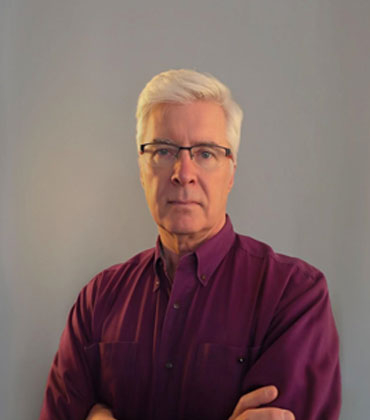
James O’Connor, CEO PTOE Corporation
PTOE
EXTRACTING PRECIOUS METALS AND RARE EARTH ELEMENTS FROM COAL WASTE - THE NEXUS OF CAPITALISM AND ENVIRONMENTALISM

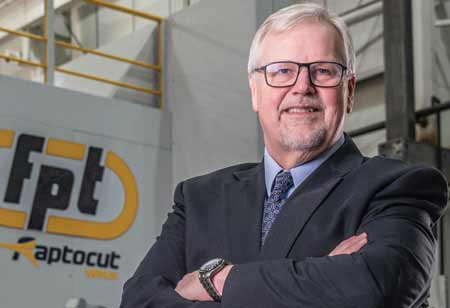
Ronnie Green, Vice President
Alpine Gold Exchange
Solving the Precious Metals Industry's Liquidity Problem
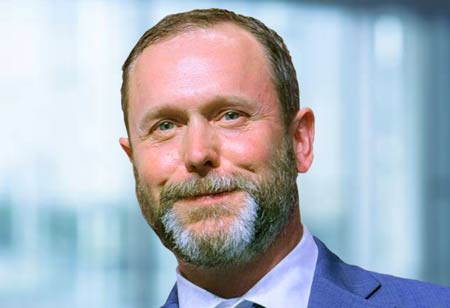
Park Kersman, Owner and President
Lorin Industries
Redefining What Anodized Aluminum Can Do for Architects, Distributors, and OEMs
EXPLORE OUR KNOWLEDGE NETWORK
The articles and profiles featured here are based on contributions from industry leaders and editorial research. They reflect the views and expertise of the individuals and organizations featured, as reviewed by our editorial team.
